
Maymester Courses
Listen to some professors talk about what you will learn in their Maymester courses.


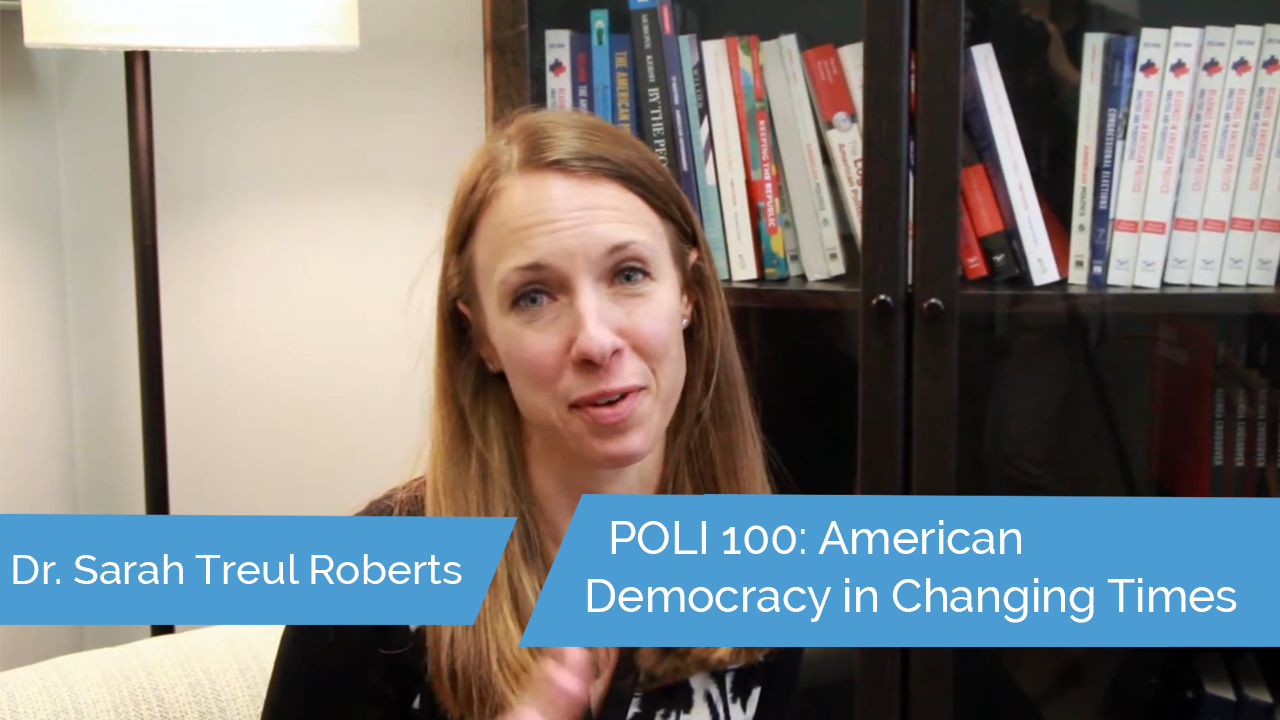

Maymester 2024
AAAD 231 African American History Since 1865 (3)
Special emphasis on post-emancipation developments. This course focuses on the Reconstruction era to assess the gains and losses African Americans experienced in this period. Additionally, the legal, social, and political developments that impacted African Americans in the post-emancipation era will be explored to assess how African Americans attempted to reconstitute themselves in slavery’s aftermath. Online section available.
AAAD 290 Memory Work at Penn Center (3)
Explore the history of the Penn Center at Wilson Library before embarking on a journey to St. Helena Island, South Carolina, this course will assist in preserving the Gullah and Geechee heritage using newly discovered archival materials. The Penn School, established in 1862 as one of the first schools in the South for formerly enslaved West Africans, evolved into Penn Community Services in 1948. This transition marked a commitment to social justice, playing a pivotal role in the Civil Rights Movement alongside Dr. Martin Luther King, Jr. and the Southern Christian Leadership Conferences of the 1960s. Discover how memories can be harnessed to serve historically Black spaces and places. This course includes a mandatory trip to St. Helena, SC from May 21-25, with transportation, meals, housing, and excursions covered by a Mellon grant. Additional meetings will take place on campus in Chapel Hill.
AMST 220 On the Question of the Animal: Contemporary Animal Studies (3)
This course is an introduction to “animal studies,” through animal rights, animal welfare, food studies, and the human/animal distinction in philosophical inquiry. We will read work from dog and horse trainers and explore the history of the American racetrack. This course builds a moral and ethical reasoning skill set.
AMST 222 The Death Penalty in American History (3)
This course explores the history of the death penalty in America between the colonial era and the present.
AMST 275 Food and American Culture (3) ***Canceled***
In this course, we will explore the ways in which food shapes the politics and ethics of individuals and communities and is an increasingly important marker of social and cultural identities. Lessons for this course focus on the symbolic functions of food in the construction of personal, cultural, political, and community identity.
ANTH 102 Introduction to Cultural Anthropology (3)
An introduction to non-Western cultures studied by anthropologists. Includes an in-depth focus on the cultural and social systems of several groups.
ANTH 149 Great Discoveries in Archeaology (3)
This course provides students with a detailed look at some of the most significant archaeological discoveries from around the world, including Neanderthals, Stonehenge, and the Egyptian pyramids. Morning
ANTH 237 Food, Environment, and Sustainability (3)
This course explores the nexus of agricultural, ecological, and food systems as they dynamically interact. The class examines case studies from North Carolina and other parts of the world. Themes include nutrition, food security, agroecology, and sustainable livelihoods. Students engage in readings, class projects, and hands-on activities in a laboratory setting.
ANTH 419 Anthropological Application of GIS (3)
GIS experience required. This course explores applying GIS science technologies to anthropological problems. Students will learn GIS skills and apply them using spatial data. Geographic Information System (GIS) skills are an important toolkit in many fields. This class introduces students to many concepts of GIS and provides them with training through GIS labs. Students with an interest in mapping, spatial analysis, and cartography are encouraged to enroll. Morning.
ARTH 551 Introduction to Museum Studies (3)
Introduces careers in museum and other cultural institutions. Readings and interactions with museum professionals expose participants to curation, collection management, conservation, exhibition design, administration, publication, educational programming, and fundraising.
ARTS 415 Conceptual Photo (3)
An advanced photography course for students interested in contemporary photographic practices, critical theory, art history, and experimental processes: theory and practice, formal and conceptual investigations, and historical and contemporary strategies will all be given equal attention
ASIA 150 Asia: An Introduction (3)
The course introduces Asia’s historical, cultural, and political diversity by examining some of the global forces that have shaped Asian societies (e.g., colonialism, orientalism, and neoliberalism). One extra hour and fifteen minutes of asynchronous activities daily.
ASIA 462 (JWST/PWAD 462.) The Arab-Jews: Culture, Community, and Coexistence (3)
The Israeli (Zionist)-Arab conflict, which has lasted for over 100 years, has instilled in the minds of many the notion of the incompatibility of the terms “Arabs” and “Jews.” The presence of Jews in Arab lands and the often peaceful co-existence between the Jews and their neighbors render “Arab-Jews” not an oxymoron, but a historical reality. This course is designed to examine Jewish life in Arab lands in the last century by examining culture, language, and the communal life the Arab-Jews shared with their neighbors of other faiths. Class materials include scholarly texts, literary works, films, and music related to the theme of Arab-Jews. Course flyer.
CHIN 356 Chinese Environmental Literature (3)
MAYMESTER. Introduces students to Chinese and Taiwanese cultural understandings of human relations to the natural environment. Analyzes classical and modern environmental literature (poetry, essays, fiction, and philosophy) and evaluates how contemporary building practices, governmental policies, and green technologies may be influenced by diverse Chinese philosophical traditions.
Chinese aesthetics in painting, poetry, architecture, garden and urban design are said to emphasize one of the essential concerns of sustainability, harmony between humans and their environment (tianren heyi). In this course we study classical and modern Chinese literature (translations of poetry, fiction, and philosophy) to compare how Han Chinese, Indigenous Taiwanese, Tibetan, Wa, Yi, and Mongolian traditions relate humans to their environments (animals, plants, ecosystems, the cosmos). Analyzing these literary imaginations of relational dynamics among humans, non-human animals, ecosystems, and cosmos may challenge our prevailing ecological paradigms. We also consider how principles from these traditions might inform current green technologies, practices, and policies that address pressing global environmental concerns. No previous knowledge of Chinese language, literature, or philosophy is required.
CLAR 242 (ARTH 242) Egyptian Art and Archaeology (3)
A survey of the archaeological remains of ancient Egypt, from the earliest settlements of the Neolithic period until the end of the New Kingdom.
This course is an introductory survey of the archaeology, art and architecture of ancient Egypt, ranging in time from the prehistoric cultures of the Nile Valley through the New Kingdom. While the course will examine famous features and characters of ancient Egypt it will also provide a wide-ranging review of the archaeology of this remarkable land, including questions of ethics and the role of colonialism in the formation of the discipline.
CLAS 263 Athletics in the Greek and Roman World (3)
Study of athletics as a unifying force in ancient society, emphasizing the Olympic games and other religious festivals. Consideration of athletic professionalism, propaganda, and social trends using literary and archaeological sources. Honors version available.
This course examines the athletic cultures of Greece and Rome from the age of Homer to the end of the (Western) Roman Empire. Students consider the mechanics and logistics of ancient events, taking up larger questions of cultural interpretation by situating ancient athletic practice within religious, social, and political contexts. By pursuing a variety of theoretical approaches, students gain insight into many distinctive features of organized sport across time. Questions to be considered include: What legacies and lessons have ancient athletics left for the modern world? How did the ideals embodied in Greek and Roman sport relate to the myths and cultural practices of those eras? In what ways—if at all—were Greek and Roman athletic ideals unique? What differences existed between professional and amateur athletes, and how does this inform modern debates? In short: What can we learn about a society from its sports?
DRAM 300 Directing for Documentary Theatre
This section is for those who want to make an entry point to Documentary Theatre as Director.
COMM 150 Introduction to New Media Credits (3)
An introduction to the design, aesthetics, and analysis of various forms of digital media. Hands-on experience with different modes of creation, including graphics, web-based communication, and social media.
DRAM 288 Theatre for Social Change (3)
This section is for those who want to make an entry point to Documentary Theatre as Researchers and Writers. This class is for theatre artists interested in activism and activists interested in theatre. We will explore how theatre can be used to discuss issues surrounding social justice, historical events and underrepresented communities. We will work with forms such as verbatim theatre, investigative theatre, theatre of fact, theatre of witness, autobiographical theatre, and ethnodrama, students can choose the medium of the final projects– Stage, Film, or Podcast. No experience required.
DRAM 290 Performance in Documentary Theatre (3)
This section is for those who want to make an entry point to Documentary Theatre as Performers.
Each class will:
a.) Focus on ensemble building using theatre exercises.
b.) Study techniques for obtaining oral history and conducting interviews.
c.) Study the works of playwrights such as Erwin Piscator, Anna Deavere Smith, Techtonic Theater Project, The Civilians, Jessica Blank and Eric Jensen
d.) Conduct interviews based on a theme/community of our choosing.
e.) Create new work using interviews and archival research.
f.) Have a performance for an invited audience at the end of the course.
DRAM 191 Technical Methods: Scenery (3)
No prerequisite required Introduction to the equipment, procedures, and personnel in the design and execution of plans for scenery, lighting, properties, and sound for theatrical productions. Students will learn the structure, tools, and safety aspects of the scene shop. They will then apply these skills while designing and building half-size scenery for a chosen play.
ECON 325 Entrepreneurship: Principles, Concepts, Frameworks, and Fluency (3)
Prerequisites, ECON 125 or permission of the instructor. This class provides a foundation in key principles, concepts, and fluency in entrepreneurship, specifically in the areas of design thinking, understanding consumers and customers, company strategy, and entrepreneurial finance and capital formation. Additionally, the class introduces important skills and tools important in startups and growth companies such as branding, storytelling and video making. Priority is given to students accepted into the Shuford Minor in Entrepreneurship.
ECON 393 Practicum in Entrepreneurship (3-6)
Prerequisites, ECON 125, 325, and an internship approved by the Shuford coordinator. This capstone course is a hands-on learning lab to prepare you for entrepreneurial life. This class introduces you to speakers, readings, podcasts, exercises, assignments and practical lessons about entrepreneurship. It provides you with critical analysis of your performance as seen through the lens of other Founders, Entrepreneurs, and Senior Executives. You develop both practical skills of financial and operational management and soft skills for personal and professional development needed to be competitive in entrepreneurial activity.
ECON 468 Socialism, Planning, and the Contemporary Russian Economy (3)
Prerequisites, ECON 400, and 310 or 410; a grade of C or better in ECON 400, and 310 or 410 is required. Study of the principles, design, organization, and performance of state-controlled economies relying on planning or regulated markets, with an emphasis on continuity and post-communist transition.
EDUC 401 Child Development: Birth to Twelve (3)
This course examines the field of child development as it contributes to the teaching and learning of children in early childhood and elementary educational settings, ages prenatal to age 12.
ENGL 128 Major American Authors (3)
A study of approximately six major American authors drawn from Emerson, Thoreau, Hawthorne, Melville, Stowe, Whitman, Clemens, Dickinson, Chesnutt, James, Eliot, Stein, Hemingway, O’Neill, Faulkner, Hurston, or others.
ENGL 130 Introduction to Writing Fiction (3)
Intended for sophomores and first-year students. A writing-intensive introductory workshop in fiction. Close study of a wide range of short stories; emphasis on technical problems. Composition, discussion, and revision of original student stories. Students may not receive credit for both ENGL 130 and ENGL 132H. This course (or ENGL 132H) serves as a prerequisite for other courses in the fiction sequence of the creative writing program.
ENGL 265 Literature and Race, Literature and Ethnicity (3)
MAYMESTER. Considers texts in a comparative ethnic/race studies framework and examines how these texts explore historical and contemporary connections between groups of people in the United States and the Americas.
ENGL 268 Medicine, Literature, and Culture (3)
An introduction to key topics that focus on questions of representation at the intersections of medicine, literature, and culture.
ENGL 279 Migration and Globalization (3)
Covers literary and other social texts associated with the legacies of population transfers and the movements, forced or voluntary, of people across borders. Course previously offered as ENGL 365.
ENGL 307 Stylistics (3)
An occasional intermediate course that may focus on such topics as living writers, poetic forms, flash fiction, or imitation.
EXSS 288 Emergency Care of Injuries and Illness (3)
Recommended preparation, EXSS 155 or EXSS 175 . Theory and practice of basic first aid, cardiopulmonary resuscitation, and the acute care of athletic injuries.
GEOG 115 Maps: Geographic Information from Babylon to Google (3)
Introduces the science and art of map making and will lay the conceptual foundation necessary to understand how and why maps are made and used.
GEOG 130 Development and Inequality: Global Perspectives (3)
An introduction to historical and contemporary ideas about practices and meanings of development. Students will explore “development” in a global landscape of poverty, power, and struggles over inequality.
GEOG 390 Contemporary Topics in Geography (1-12)
Agroecology: Principles and Practice (GEOG 390) is an experiential course that explores the intersection of food cultivation, culture, and ecology. In it, we study the history, principles, and practices of Black and indigenous agroliberation movements (past and present); to put principle to practice, we will study and work on a Black-run freedom farm, which fulfills the APPLES service-learning components of this course. Instructor permission required
GEOG 429 Urban Political Geography: Durham, NC. (3)
An interdisciplinary exploration of urban social problems, bridging the literature on urban geography with that on urban politics. Students will be required to complete 30 hours of service for an organization that works on an urban social issue
GEOG 435 Global Environmental Justice. (3)
This advanced course brings geographical perspectives on place, space, scale, and environmental change to the study of environmental justice. In lectures, texts, and research projects, students examine environmental concerns as they intersect with racial, economic and political differences. Topics include environmental policy processes, environmental justice movements, environmental health risks, conservation, urban environments, and the role of science in environmental politics and justice. (GHA)
GEOG 491 Introduction to GIS. (3)
Stresses the spatial analysis and modeling capabilities of organizing data within a geographic information system. (GISci)
GERM 400 Advanced German Grammar (3)
Review of basic and advanced grammatical structures. Course strengthens application of grammar in context for undergraduate and graduate students. Graduate students also work with grammar issues encountered in the foreign language classroom.
GLBL 487 Social Movements: Rethinking Globalization (3)
This course explores the history, objectives, and manifestations of global social movements.
Specifically, we explore what it means to be an effective “global” social movement in the 21st century. Beginning with the “movement of movements,” which includes the anti-corporate globalization protests of the 1990s, the Zapatista movement, and many others, we look at the history, causes, objectives and myriad manifestations of movement and resistance, instantiations and possibilities. Based around key examples as well as local projects and groups, this course will investigate what it means to be a global social movement, what pursuing an alternative global agenda looks like, as well as what social change in the 21st century means. In addition to concrete cases, we will look at the various theories and spatial imaginaries underlying different movement practices and visions— often reading literature produced by and for movements. The course will also include some emphasis on research methods, ethics, and practices.
HIST 140 The World since 1945 (3)
This introduction to the contemporary world examines the Cold War and its international aftermath, decolonization, national development across a variety of cases, and trends in the global economy.
HIST 262 History of the Holocaust: The Destruction of the European Jews (JWST/PWAD 262) (3)
Anti-Semitism; the Jews of Europe; the Hitler dictatorship; evolution of Nazi Jewish policy from persecution to the Final Solution; Jewish response; collaborators, bystanders, and rescuers; aftermath.
HNRS 334 Silicon Revolution (3)
Silicon Valley is celebrated as a global capital of high-tech innovation and transformative economic development. Business leaders and politicians in other regions have attempted to reproduce that accomplishment, almost always with limited success. Why has the task been so difficult? What combination of institutions, public policy, people, and geography transformed the orchards of Santa Clara County into the epicenter of a new knowledge economy? And what lessons can Silicon Valley teach us about the roles that government, universities, and private capital might play in inventing the future? These are the questions this course sets out to explore.
We’ll use the first week of class to immerse ourselves in the history of Silicon Valley. Then we’ll spend a week in San Francisco and Palo Alto, where we’ll visit with UNC alumni working in small start-ups, technology giants such as Google and Cisco, and venture capital and private equity firms. When we return to Chapel Hill, we’ll use our last week to take the measure of what we’ve learned and to connect lessons from Silicon Valley to the challenges of economic development in North Carolina.
Travel dates: We’ll travel to San Francisco on Saturday, May 18, and return on Saturday, May 25.
Costs: In addition to Summer School tuition, students will pay a program fee (currently estimated at $1,700 (the final cost will depend on hotel and transportation expenses, which have not yet been finalized) directly to Honors Carolina. The fee will cover the cost of airport transfers, lodging at the Cardinal Hotel in downtown Palo Alto, local transportation, and lunch and evening meals. It will not cover airfare, the cost of other meals, or incidental personal expenses. Scholarship support will be available.
Enrollment is by permission of the instructor. Students should click here to provide a brief statement of interest.
MATH 347 Linear Algebra for Applications (3)
The algebra of linear combination of vectors has numerous applications in the arts and sciences, most recently as a foundation for data science and artificial intelligence. Vectors can be used to represent visual images, musical scores, or medical cardiograms. Exploring the range of new entities (images, sounds, diagnoses) that can thus be obtained leads to consideration of matrices, linear systems of equations, best approximations, eigenvalues and algorithms for these procedures. This course presents the mathematical framework for linear algebra enhanced by numerous applications, with a focus on treating art images as data that can be processed to identify particular artists or even produce new works in a particular style. No prerequisites are required and computer programming and mathematical calculus concepts are introduced as needed throughout the course.
MEJO 371 Advertising Creative (3)
Application of findings from social science research; social responsibility of the copywriter and advertiser; preparation of advertisements for the mass media; research in copy testing. Previously offered as MEJO 271.
MEJO 475 Concepts of Marketing (3)
Designed to provide the larger business context for students anticipating careers in advertising, public relations, and other media industries, the course teaches the vocabulary and basic concepts of marketing as it will be practiced.
MEJO 390.01 – Drone Storytelling (3)
This intensive two-week course combines the art of storytelling with the technical skills required to obtain the Federal Aviation Administration (FAA) Remote Pilot License. Designed for aspiring journalists and media professionals, this course equips students with the knowledge and practical skills needed to create visually captivating and narrative-rich photos and videos using drones, while also ensuring their readiness for the FAA Remote Pilot Exam. This class is open for all majors and non-traditional students.
MUSC 239 Introduction to Music Technology (3)
A practical study of selected aspects of computerized music technology, including one or more of sound design, MIDI sequencing, analog and digital synthesis, recording techniques, and electronic music composition.
PLAN 575 Real Estate Development (3)
Rigorous examination of real estate development from the entrepreneurial and public perspectives. Emphasis on risk management and the inherent uncertainties of development. The four dimensions of real estate are addressed: economic/market, legal/institutional, physical, and financial. Previously offered as PLAN 375.
PLCY/PWAD 450 Internal and Interpersonal Conflict Management (3)
This course aims to provide students with the tools necessary to most effectively engage in interpersonal conflicts. Students engage with diverse conflict management practitioners–from formally incarcerated individuals to public policy negotiation to international conflict mediators and role-play cross-cultural communication, inter-governmental negotiations, human rights, and workplace negotiations. Students will learn new negotiation and mediation skills, build upon existing ones, and learn to cope with stress, discomfort, and emotions when in conflict. Previously offered as PLCY/PWAD 330.
This course is meant for future peacemakers and peacebuilders who aim to make a difference in and with their immediate and wider environments: friends, romantic partners, family members, work colleagues, and one’s community.
Peacemakers and peacebuilders are often focused on the wellbeing of others. Their own wellbeing is often pushed to the side to make space for those in pain. This course is an opportunity to prioritize the physical, mental, emotional, and spiritual wellbeing of the peacemakers and peacebuilders so that they may better serve others, learn how to take care of themselves when they are in the workforce, and build a community that is based on mutual understanding.
Most sessions will be conducted by “sitting in circle” and in small groups. We will learn and practice communication-intensive circles, build High-Quality Listening skills, discover our relationship with apology and forgiveness, and learn how to better understand our own needs and the needs of others. Course flyer.
At the end of this course, students might be able to answer the following questions:
- Howand why do I react to conflict?
- Howhas my past impacted the way I respond to conflicts today?
- What actions must I take to improve my relationships with others?
- And how can I build a community that is based on trust?
PLCY 795 Leading for Impact Across Sectors (3)
This final MPP course will help students understand the power of cross-sector collaboration and effective strategies to lead social and environmental change across sectors. Co-taught by an academic and practitioners, the syllabus uses case studies, outside speakers, seminars, and debate to explore evolving models of cross sector collaboration to advance social impact. Students will learn the motivations, operations, and engagement models for stakeholders in different sectors and effective strategies to influence these stakeholders to advance societal change. Classes will provide tangible leadership skills that students can use to advance impact outside of the classroom.
POLI 204 Introduction to Southern Politics (3)
This course examines the politics of the American South. Each state is studied separately, and we examine the region from a broad/general perspective. Both academic books and journal articles are read. By the end of the course, students should be familiar with historical and contemporary politics in the South.
POLI 271 Modern Political Thought (3)
Survey course designed to introduce students to major political thinkers and schools of thought dating roughly from the 16th century to the present.
POLI 287 Strategy and International Relations (PWAD 287) (3)
Introduction to the study of strategic decision making in international relations, with an emphasis on the application of basic game theoretic models. Incorporates in-class simulations of international relations scenarios.
PSYC 435 Gender and Pronouns (3)
Prerequisites, PSYC 101. This course offers an inside look at pronouns from an interdisciplinary perspective. From a cognitive perspective, we examine major models of the role that pronouns play, and the mental processes involved in using them. From a social perspective, we examine the role pronouns play in marking gender identity, and how both language usage and gender concepts are currently in flux. Students also learn about research methods and conduct a novel empirical study.
PSYC 474 Digital Mental Health (3)
Prerequisites, PSYC 101. This course will provide an overview of the use of digital technologies to increase opportunities for training in, access to, and use of evidence-based mental health services. Coverage will include the current status of and future directions in research, innovations in service delivery, and policy implications. Special attention will be given to the evolution of the field, the potential costs and benefits, and the promise to address health disparities in particular.
PSYC 517 Addiction (3)
Prerequisite, PSYC 101. PSYC 245 and 270 recommended but not required. This course will provide students with a comprehensive overview of the etiology and treatment of addiction, along with exposure to real-life stories of addiction.
PSYC 531 Tests and Measurements (3)
Prerequisite, PSYC 101, and either PSYC 210 or 215. Basic psychometric theory underlying test construction and utilization. Detailed study of issues and instruments used in assessing intellectual functioning, educational progress, personality, and personnel selection.
PWAD 250 Introduction in Peace and Security Studies (3)
In this course, we will examine global security challenges such as international wars, internal wars, non-state violence, economic disputes, financial crises, and problems of coordination and cooperation. We will adopt a multi-disciplinary approach, drawing on lessons from political science, economics, history, sociology, and anthropology. We will begin by examining problems of international security, such as interstate crises and war, and develop an understanding of the bureaucracies tasked with managing these issues. In the second section of the course, we will first examine conflict associated with non-state actors, and will then discuss non-traditional security issues, such as financial crises and problems of common pooled resources. Throughout, we will use scientific research and historical analyses to gain a better grasp on the dynamics of security problems in the international system.
RELI 104 Introduction to the New Testament (3)
This course studies the New Testament from both a literary and a historical perspective, focusing on its origins in the land of Israel and moving into the eastern Mediterranean. In it students learn to wrestle with the nature of historical evidence, develop their skills for making argumentation, and learn how to analyze the philosophical and ethical claims of the ancient Christian texts, and participate in class debates on contemporary ethical issues. Honors version available
RELI 140 Religion in America (3)
An introduction to the history, themes, and issues in American religion from the precolonial period to the present. Honors version available.
RELI 162 Catholicism Today: An Introduction to the Contemporary Catholic Church (3)
This course provides students with a first glimpse and insight into the Catholic tradition, past, present, and future: its beliefs, structure, aims, successes, and failures. Course flyers.
RELI 220 Religion and Medicine (3)
This course will deal with global interactions of religion, health care, medical ethics, disability, and the body in the past and present. Honors version available. Course flyer.
RELI 246 Supernatural Encounters: Zombies, Vampires, Demons, and the Occult in the Americas (3) ***Canceled***
This course examines accounts of supernatural beings such as zombies and vampires and aims to understand them as popular ways of making sense of the world in the context of uneven and frequently unsettling processes of modernization, neoliberalism, and globalization.
SOCI 122 Race and Ethnicity (3)
Examines race, racism, and privilege. Introduces major sociological concepts, debates, and evidence concerning the social construction of race, and the many manifestations of racism and privilege. The course highlights the asymmetrical power relations between groups that produce and sustain inequality while also considering the factors that lead to social change.
SOCI 422 Sociology of Mental Health and Illness (3)
Examines the uniqueness of the sociological perspective in understanding mental health and illness. Draws upon various theoretical perspectives to best understand patterns, trends, and definitions of mental health and illness in social context. Focuses on how social factors influence definitions, perceptions, patterns, and trends of mental health and illness.
SPAN 338 Trans-Atlantic Cultural Topics (3)
Prerequisite, SPAN 261 or 267. Cultural history of Spain and Spanish America from the 16th century to the 21st century. Explores trans-Atlantic dimensions of Spanish and Spanish American cultures and the elements that have shaped those societies and their cultural traditions during the periods studied. Formerly offered as SPAN 331.
Subtitle: Women and Gothic: Current Trends in Spain and Latin America Gothic is understood as a mode of representation, which questions social anxieties through an aesthetic of fear and the sinister. Through a transatlantic perspective, this course would delve into the mechanisms of analysis for this aesthetic and its intersection with Women’s and Gender Studies.
SPAN 340 Iberian Cultural Topics (3)
Prerequisite, SPAN 261 or 267. This course studies trends in thought, art, film, music, and social practices in the Iberian context, and includes the study of Spain’s historical nationalities. Topics may include nationalism, ethnicity, race, class, gender, migration, and popular culture.
Subtitle: Let’s Talk about Food: Cultural Identity in Spain This course explores the culinary traditions of Spain and how they are shaped by geography, religion, demographics, and sustainability. Students will explore the importance of a group’s worldview in determining its defining characteristics as a society and influencing its creative and artistic production through food and culinary artifacts.
WGST 101 Introduction to Women Studies (3)
An interdisciplinary introduction to the field of Women’s and Gender Studies, this class explores feminist perspectives on intersecting inequalities based on gender, race, class, and sexuality. Topics include: work and labor; sexuality and sexual identity; gender relations; images of women and gender in literature, science and technology; religion; art; family; and the history of feminist struggles. Course readings are drawn from the humanities and the social sciences. Course flyer.
WGST 231 Gender and Popular Culture (3)
This course examines the ways in which gender and sexual identities are represented and consumed in popular culture. Online section only.